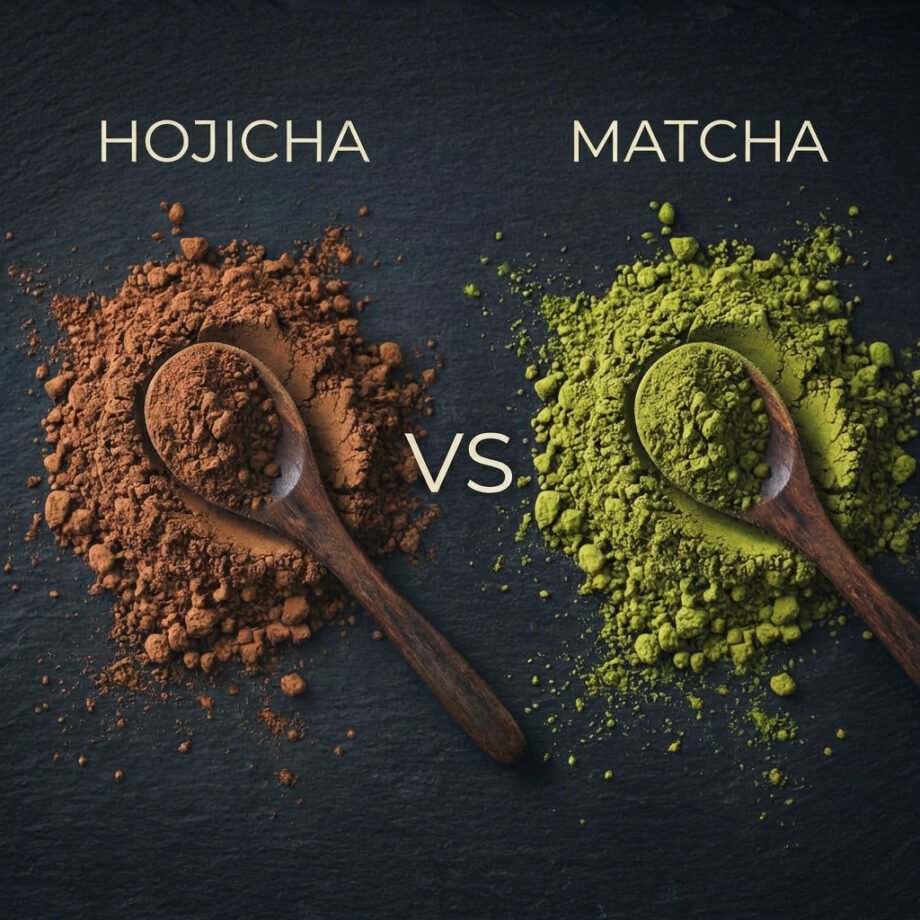
Hojicha vs Matcha — What’s the Difference?
They’re both Japanese green tea. They both come as powder. But that’s where the similarities end. Here’s an honest, detailed comparison to help you choose.
Matcha is shade-grown, stone-milled green tea — vibrant, umami-rich, caffeinated. It’s a morning tea. It can be whisked and drunk on its own, and it has centuries of ceremony behind it.
Hojicha is roasted green tea — warm, toasty, naturally low in caffeine. It’s an anytime tea. In its original form, hojicha is a loose-leaf tea. Hojicha powder is a more recent development, made for lattes and baking — not for drinking straight.
They look similar on a shelf. They’re completely different in every way that matters.
The Basics: What Each Tea Actually Is
Matcha
Matcha (抹茶) is made from tencha — tea leaves that are shade-grown for about three weeks before harvest. Shading forces the plant to produce more chlorophyll and amino acids (especially L-theanine), which gives matcha its intense green colour, umami depth, and calm-yet-focused energy. After harvest, the leaves are steamed, dried, de-stemmed, and stone-milled into an ultra-fine powder.
Because you’re consuming the entire leaf — not just an infusion — matcha delivers more caffeine, more antioxidants, and a more intense flavour than any other Japanese tea. Matcha has a deep cultural lineage: it has been central to Japanese tea ceremony (chanoyu) for centuries, and drinking matcha on its own — whisked with hot water — is a ritual with its own philosophy, aesthetics, and tools.
Hojicha
Hojicha (ほうじ茶, literally “roasted tea”) is made by roasting finished green tea — typically sencha or bancha — at high temperatures. The roasting transforms the tea’s colour from green to reddish-brown, breaks down caffeine and catechins, and creates warm, toasty, caramel-like aromatics through a process that produces a compound called pyrazine.
Hojicha is originally, and fundamentally, a loose-leaf tea. It was first created in Kyoto in the 1920s, and for most of its history, it has been brewed from whole leaves or stems in a teapot. Hojicha powder — finely ground hojicha for lattes and baking — is a much more recent development, driven by the global café latte trend. This distinction matters, and we’ll come back to it.
The Key Differences at a Glance
| Matcha | Hojicha | |
|---|---|---|
| Processing | Shade-grown → steamed → stone-milled | Steamed → processed as sencha → roasted |
| Colour | Vibrant green | Reddish-brown |
| Flavour | Umami, vegetal, creamy, slight bitterness | Toasty, nutty, caramel, smooth |
| Caffeine | High (48–80 mg/cup) | Very low (5–20 mg/cup) |
| Best Time | Morning, early afternoon | Anytime — including evening |
| Original Form | Powder (stone-milled) | Loose leaf (roasted) |
| Drink Straight? | Yes — whisked with water | As loose leaf, yes. As powder, no — mix with milk |
| Cultural Role | Tea ceremony, centuries of tradition | Everyday comfort tea, invented 1920s |
| Price | Higher (especially ceremonial grade) | Lower (both leaf and powder) |
| Antioxidants | Very high (EGCG, catechins) | Lower (roasting reduces catechins) |
Taste: Two Completely Different Worlds
Matcha tastes green. The dominant notes are vegetal — fresh grass, seaweed, umami — with a natural sweetness and a slight bitterness that varies by grade. Good ceremonial-grade matcha has a creamy, almost buttery quality. Lower grades are sharper and more bitter. It’s an acquired taste for many people, but once you love matcha, nothing else quite replaces it.
Hojicha tastes warm. The roasting process creates flavours you’d associate more with coffee than tea — toasted nuts, caramel, roasted grain, sometimes a hint of chocolate. There’s very little bitterness or astringency. It’s one of the most approachable Japanese teas: most people enjoy it from the very first sip, without any adjustment period.
If matcha is a bright morning in a Japanese tea garden, hojicha is a quiet evening by a fire. They complement each other rather than compete.
Caffeine: This Is Often the Deciding Factor
Matcha contains roughly 48–80 mg of caffeine per cup — comparable to a shot of espresso. Because matcha also contains L-theanine, the caffeine delivers a calmer, more sustained energy than coffee. But it’s still substantial: drinking matcha in the evening can keep you awake.
Hojicha contains roughly 5–20 mg per cup — about a quarter of matcha, and a fraction of coffee. The roasting process volatilises some caffeine, and hojicha is often made from more mature leaves and stems that naturally contain less caffeine to begin with. In Japan, hojicha is commonly given to children and hospital patients because of its gentleness.
For many people, this is the simplest way to decide: matcha for energy, hojicha for relaxation.
Powder vs Powder — An Important Distinction
This is something most comparison articles get wrong.
Because both matcha and hojicha are sold as fine powder, it’s easy to assume they’re the same type of product in different colours. They’re not.
Matcha has always been a powder. Stone-milling tencha into powder is the entire point of matcha — it’s how it was designed to be consumed, for centuries. You whisk it with hot water and drink it. The powder is the tea.
Hojicha powder is a food ingredient. Hojicha was never meant to be a powder. It’s a loose-leaf tea that happens to have been ground into powder for a specific modern use case: lattes, baking, ice cream, confections. Drinking hojicha powder straight — whisked with water like matcha — will give you a bitter, astringent cup that bears little resemblance to how hojicha is supposed to taste. It needs milk (or another ingredient) to work.
This doesn’t make hojicha powder lesser — it’s a different product for a different purpose. But understanding this distinction helps you use each powder correctly and set the right expectations. Read our full guide on hojicha powder vs loose leaf →
If you want a latte
Both work beautifully. A matcha latte is vibrant green, creamy, with an umami-forward sweetness. A hojicha latte is warm brown, comforting, with a roasted, almost coffee-like warmth. Hojicha lattes are particularly popular among people who want the café experience without the caffeine — you can often enjoy a hojicha latte in the evening without disrupting sleep.
If you want to drink it straight
Choose matcha (whisked with water) or loose-leaf hojicha (brewed in a teapot). Both are wonderful on their own. Don’t try to drink hojicha powder straight — that’s not what it’s for.
If you want to bake with it
Both powders work in baking. Matcha gives a vivid green colour and a vegetal, slightly bitter depth that works especially well in chocolate and dairy-based desserts. Hojicha gives a warm, earthy, caramel-like flavour that pairs beautifully with brown butter, vanilla, and white chocolate. Hojicha powder is generally less expensive, making it more practical for recipes that require a larger volume.
Price
Matcha is significantly more expensive than hojicha across the board. This is because matcha production is far more labour-intensive: shade-growing, hand-picking, de-stemming, stone-milling. A quality ceremonial-grade matcha can cost $0.80–$1.50+ per gram. Hojicha powder typically costs $0.30–$0.60 per gram.
Loose-leaf hojicha is even more affordable — it’s one of the most budget-friendly Japanese teas, and the same leaves can be re-steeped multiple times.
Health Benefits: A Quick Comparison
Matcha wins on antioxidants. Because you consume the entire leaf, matcha delivers vastly more catechins (especially EGCG) and L-theanine than any brewed tea. The research on matcha’s cardiovascular, metabolic, and cognitive benefits is substantial.
Hojicha wins on gentleness. Its low caffeine, reduced tannins, and smooth character make it easier on the stomach and suitable for evening drinking. The roasting process creates pyrazine, a compound associated with improved blood circulation and a warming sensation — which is part of why hojicha feels so physically comforting.
Neither is “healthier” — they serve different needs. If you want a morning health ritual with maximum antioxidant density, matcha. If you want a soothing, low-impact tea you can drink all day without thinking about caffeine, hojicha.
Which One Should You Choose?
Choose matcha if:
You want focused morning energy. You enjoy umami, vegetal flavours. You want to drink it straight (whisked) or as a latte. You’re drawn to the ritual and aesthetics of Japanese tea ceremony. You want maximum antioxidant benefits.
Choose hojicha if:
You want something warm and comforting with almost no caffeine. You prefer toasty, nutty flavours over grassy ones. You want a tea you can drink in the evening or give to kids. You’re looking for a coffee alternative without the jitters. You want an affordable entry into Japanese tea.
Choose both if:
You want the best of both worlds — matcha in the morning for energy, hojicha in the evening for comfort. Many of our customers keep both on hand. They complement each other perfectly, and together they cover every time of day and every mood.
Our Collection
Hojicha — Loose Leaf
Hojicha in its original form. Brewed in a teapot, these teas deliver the full depth of flavour that hojicha is known for. We carry five loose-leaf hojichas — from a classic charcoal-fired to a rare hand-roasted artisanal bo hojicha. Explore our Hojicha Guide →
Hojicha — Powder (for Lattes & Baking)
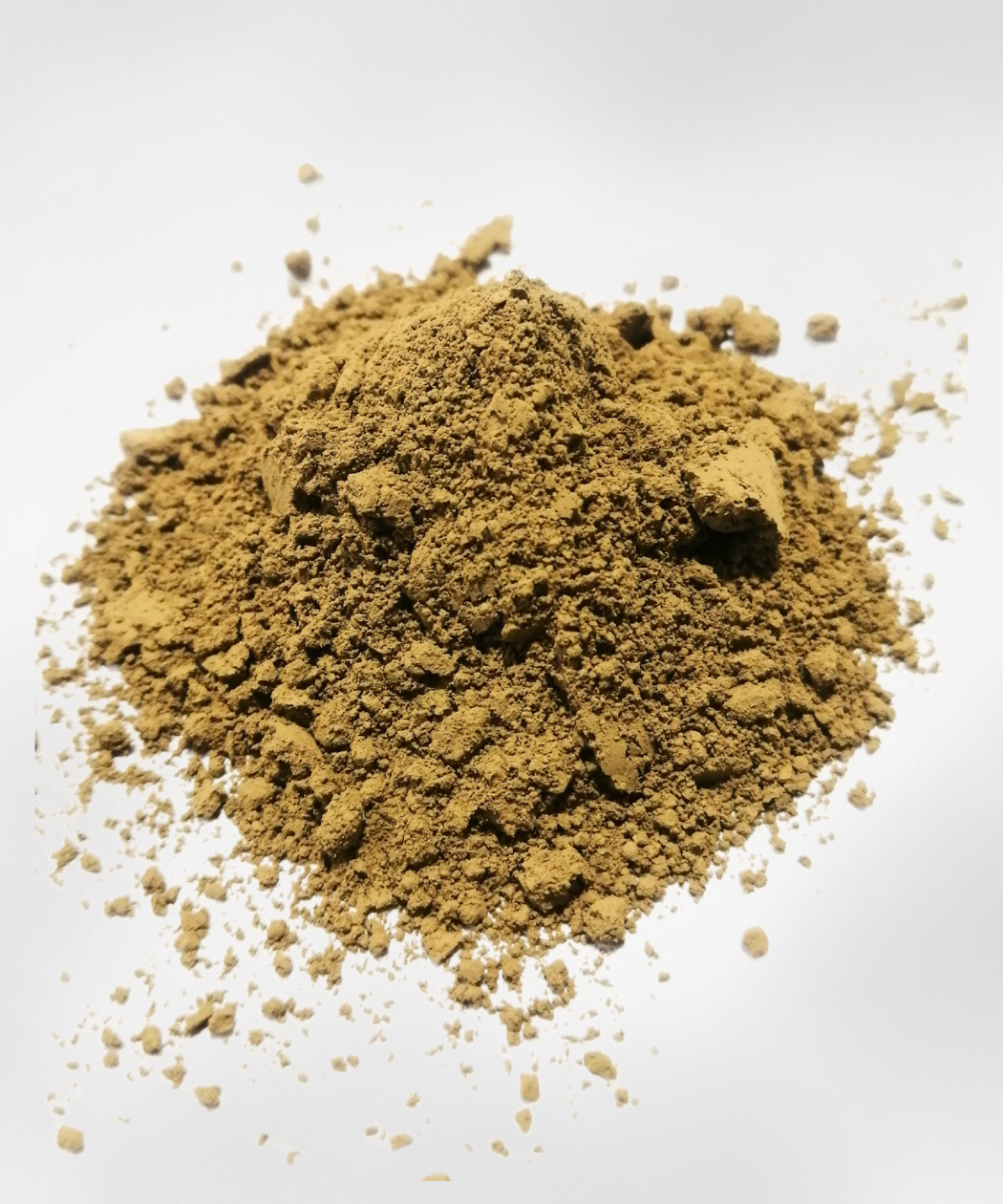
Hojicha Powder — Zairai
Made from the same native-cultivar hojicha as our signature loose-leaf. A dignified bitterness — assertive, honest, distinctly organic. The bitterness cuts through milk beautifully, making it ideal for lattes where you want the hojicha to stand out.
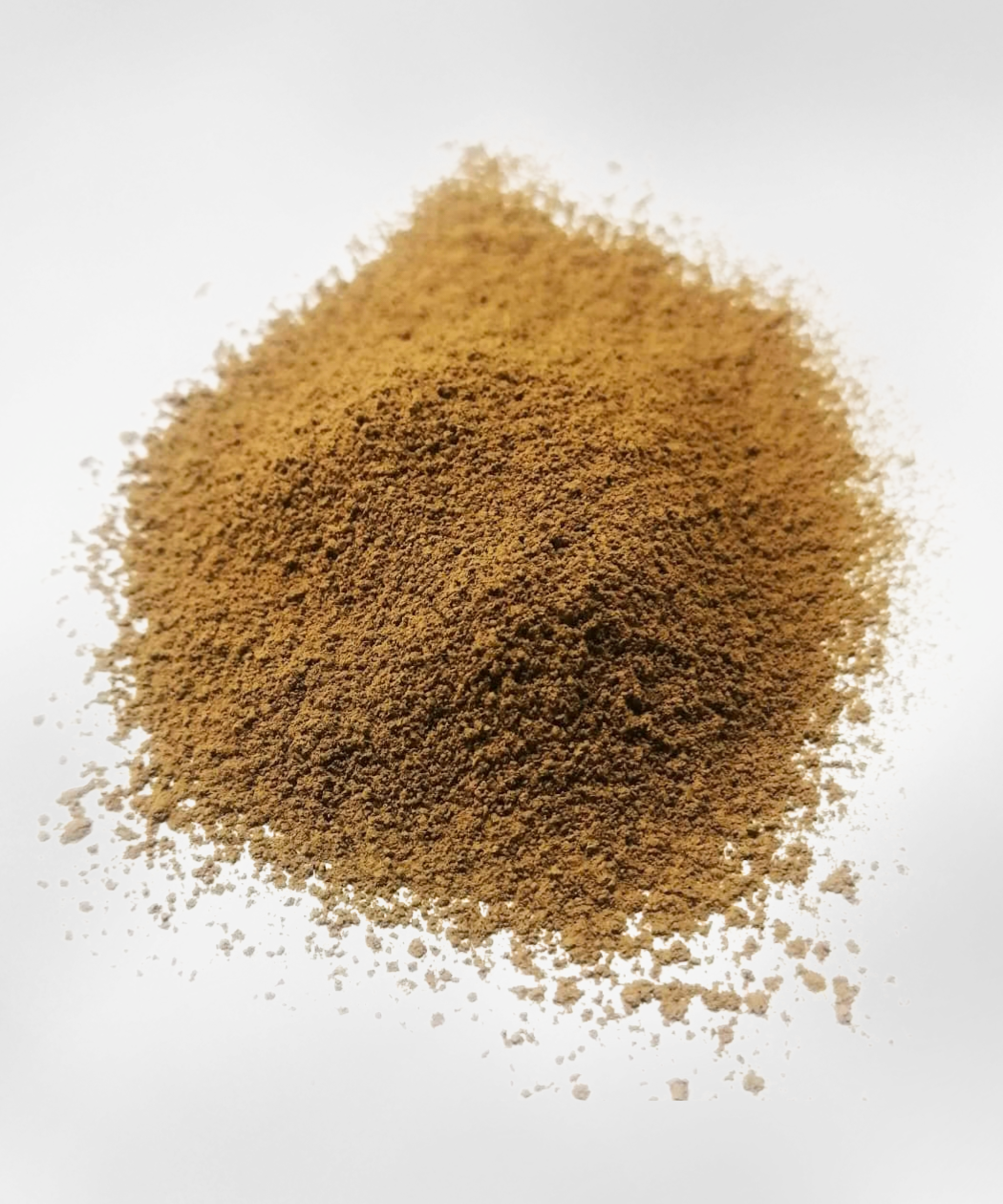
Hojicha Powder — Shizuoka Blend
Blended by a tea master for balance and approachability. Smoother, sweeter, more rounded. Works even with cold steeping — just mix directly into cold milk without hot water. The easier, more forgiving option.
Matcha

Matcha Shizuoka
A solid everyday matcha for daily lattes. Clean, balanced, with a slight bitterness that cuts through milk nicely. Great value at 50g.
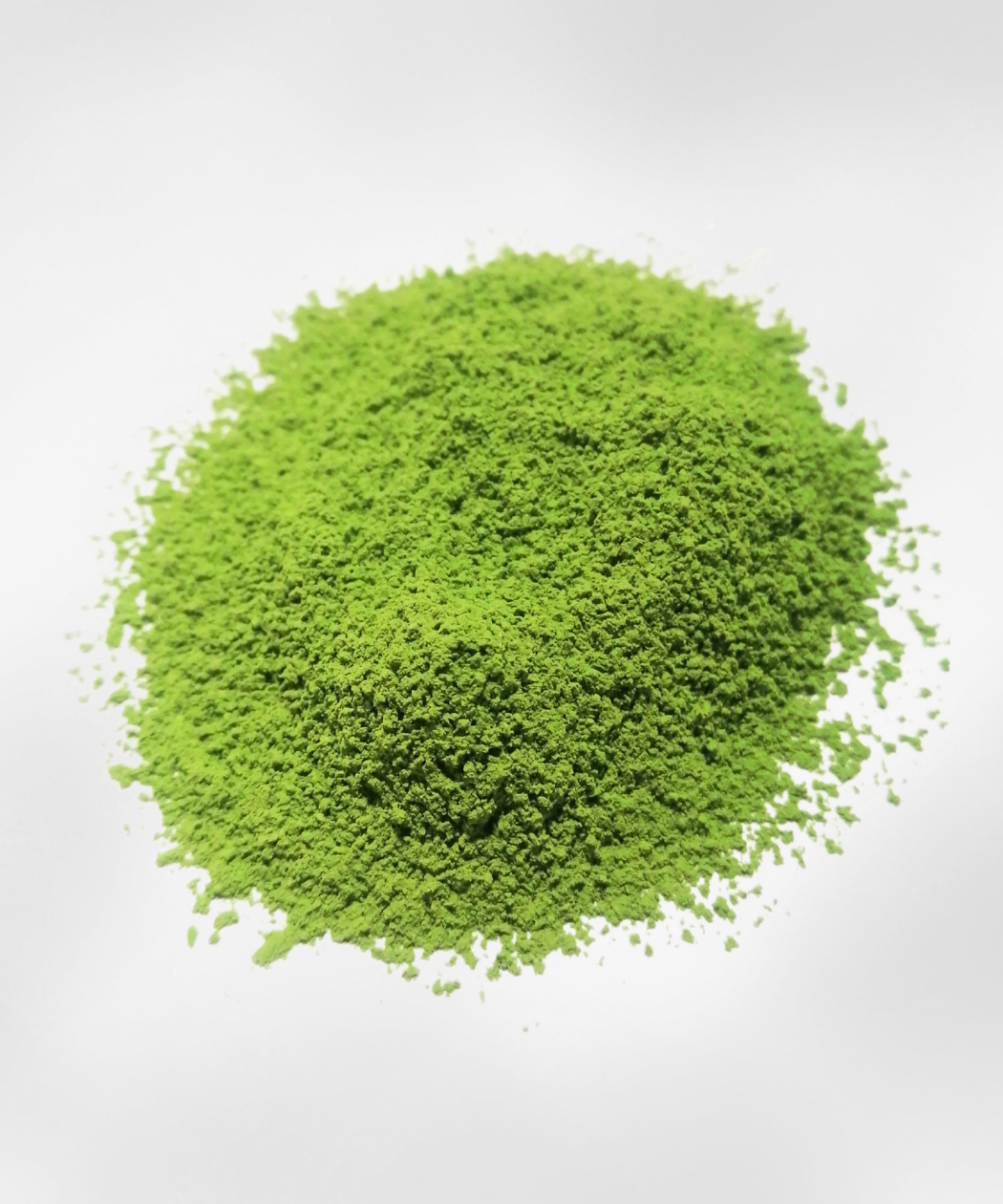
Matcha Okumidori
Our signature matcha. Rich enough to drink straight, smooth enough for a beautiful latte. The sweet spot between ceremony and daily use.
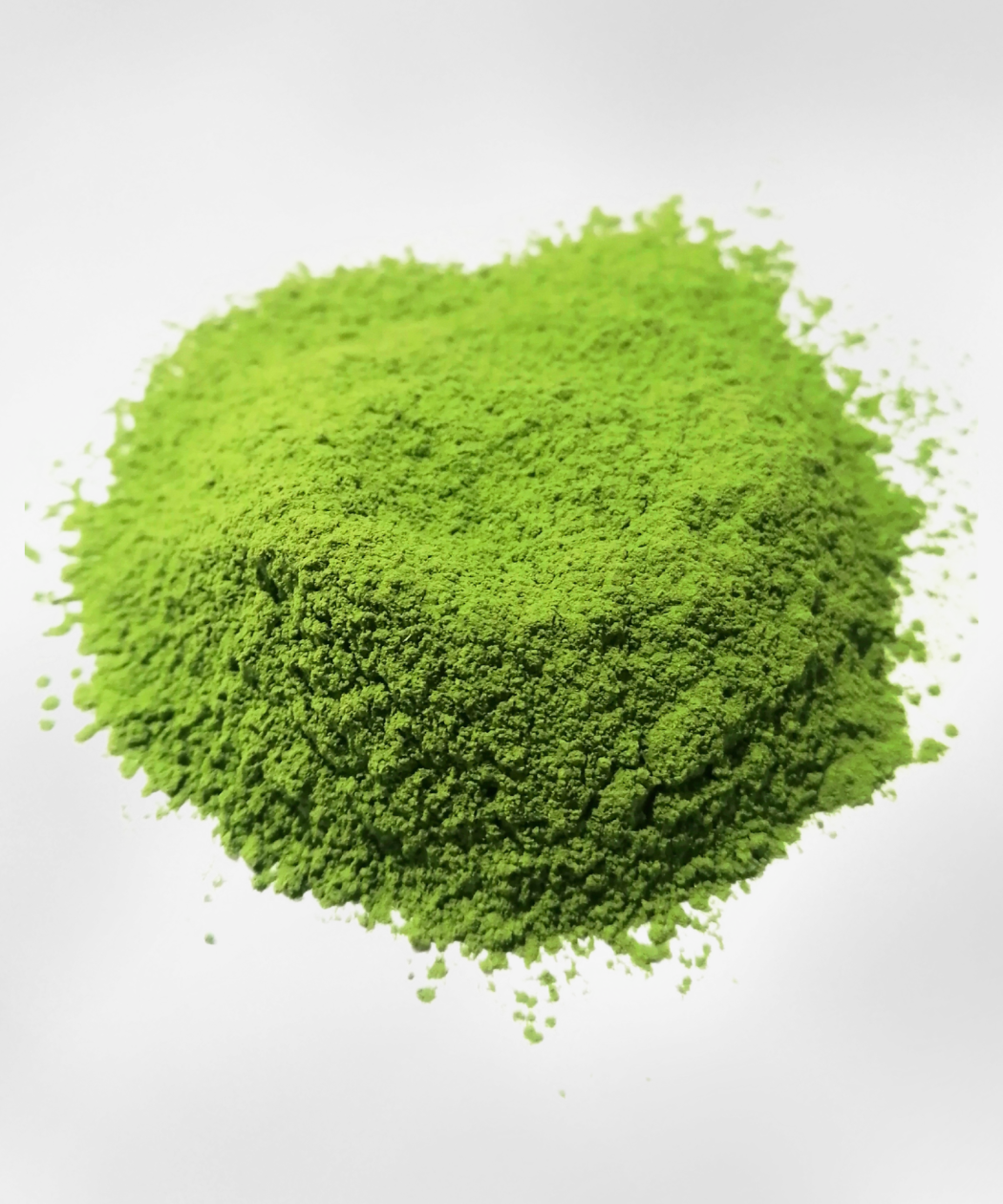
Matcha Sonogi
A ceremonial-grade matcha from Nagasaki with remarkable sweetness and depth. Whisked on its own, it’s a meditation. As a latte, it’s an exceptionally premium experience.
We carry seven matcha teas spanning everyday to ceremonial grade. Browse all matcha →
Frequently Asked Questions
Can I use hojicha powder the same way as matcha?
For lattes and baking, yes — the preparation is very similar. But unlike matcha, hojicha powder is not meant to be whisked with water and drunk straight. It’s a culinary ingredient that needs milk, sweetener, or other ingredients to taste its best. Matcha, on the other hand, is designed to be enjoyed on its own as a whisked tea.
Which has more caffeine?
Matcha — significantly more. A cup of matcha contains roughly 48–80 mg of caffeine (comparable to espresso), while hojicha has only 5–20 mg. If caffeine is a concern, hojicha is the clear choice for afternoon and evening drinking.
Which is better for lattes?
Both make excellent lattes — they’re just very different experiences. Matcha lattes are vibrant green with a rich, umami-forward flavour. Hojicha lattes are warm brown with a toasty, almost coffee-like cosiness. Many people who love matcha lattes in the morning switch to hojicha lattes in the evening.
Is hojicha just roasted matcha?
No. This is a common misconception. Matcha is made from tencha (shade-grown tea leaves). Hojicha is made by roasting sencha, bancha, or kukicha (stem tea) — entirely different base teas with different growing and processing methods. They start as different raw materials and end up as completely different products.
Can kids drink hojicha?
Yes. In Japan, hojicha is one of the most common teas given to children because of its very low caffeine content and gentle, non-bitter flavour. It’s also frequently served to hospital patients and elderly people. Matcha’s higher caffeine content makes it less suitable for young children.
Which is healthier?
Matcha has higher antioxidant density (catechins, EGCG, L-theanine) because you consume the whole leaf. Hojicha is gentler on the stomach, lower in caffeine, and contains pyrazine (from roasting) which supports blood circulation. Neither is objectively “healthier” — they serve different needs. Many people drink both.
Why is matcha so much more expensive?
Matcha production is exceptionally labour-intensive. The tea bushes are shaded for three weeks (requiring physical structures to block sunlight). Only the youngest, most tender leaves are picked. After processing, stems and veins are painstakingly removed. The remaining leaf is then stone-milled into powder — a slow process. A single stone mill produces only about 40g of matcha per hour. Hojicha, by contrast, uses leaves that are simply roasted — a far simpler and faster process.
I’ve never tried Japanese tea. Which should I start with?
If you enjoy coffee and want a morning ritual, start with matcha. If you want something warm, comforting, and caffeine-free for the evening, start with hojicha. If you’re not sure, try one of each — our Hojicha Powder Shizuoka Blend and Matcha Shizuoka are both great entry points at accessible price points.
Explore Our Collection
We carry 7 loose-leaf hojichas, 2 hojicha powders, and 7 matcha teas — all sourced directly from Japan. Ships across Canada.
Shop Hojicha Shop MatchaKawagiri Tea sources all hojicha and matcha directly from Shizuoka and other Japanese tea regions. Every tea is curated by a certified Japanese Green Tea Instructor and tested with Canadian water.