“Ceremonial grade” and “culinary grade.”
You’ve seen these labels on every matcha product online. They sound official — like there’s a regulatory body somewhere deciding which powder gets which title.
There isn’t.
These terms have no official definition. Not in Japan. Not in any international standard. Any company can put “ceremonial grade” on any green powder and there is nothing stopping them.
But here’s what most people don’t know: Japan’s tea industry does have more precise categories for the different types of green powder on the market. These categories aren’t widely known even among Japanese consumers — the distinctions live deep inside industry standards and trade documents, not on retail shelves. In the Western market, where matcha is booming with even less context, the picture becomes even more opaque.
This article breaks down every type of green tea powder using the framework Japan’s industry actually uses — so you can see exactly what you’re buying, and what’s really in the bag.
The full picture
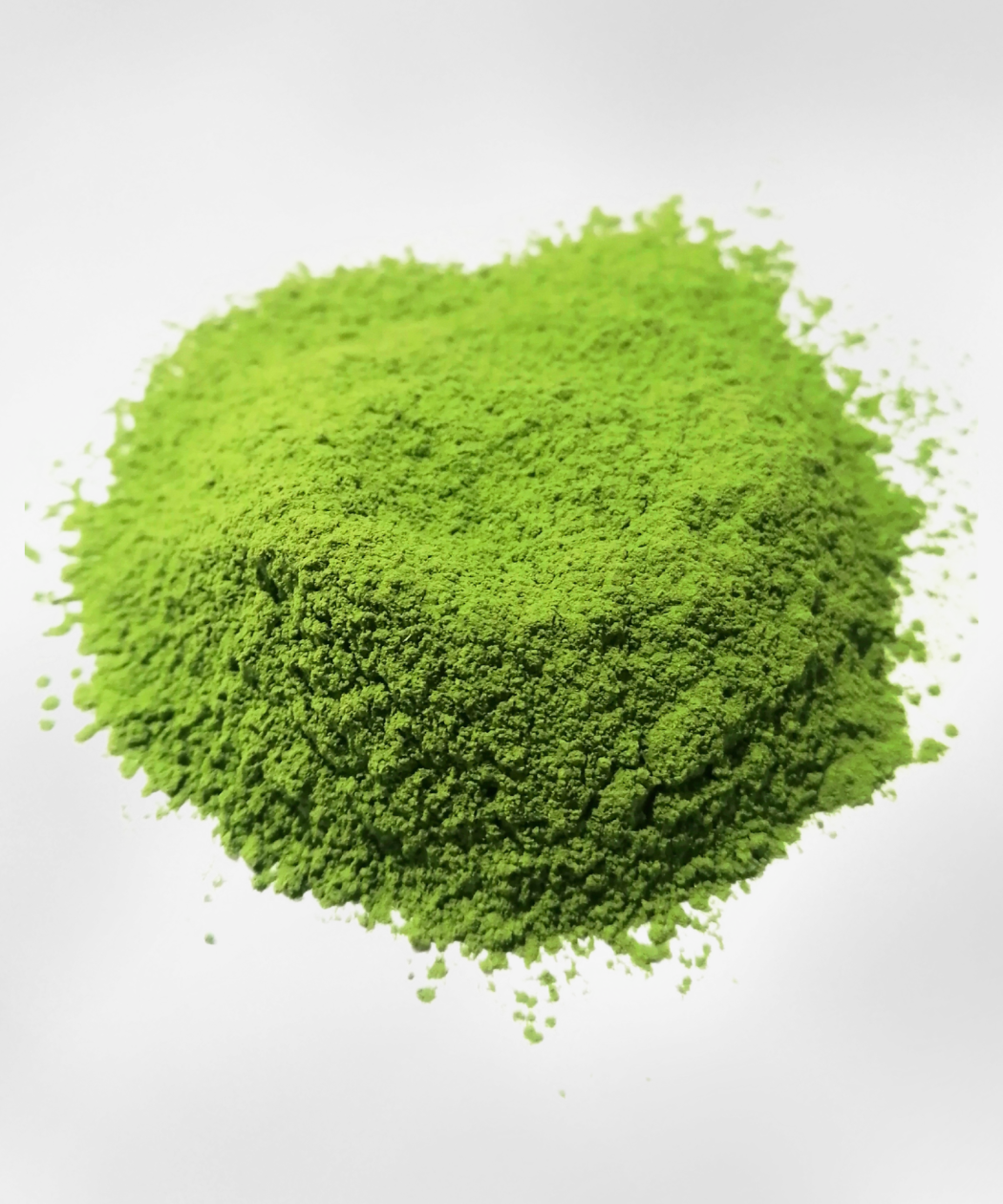
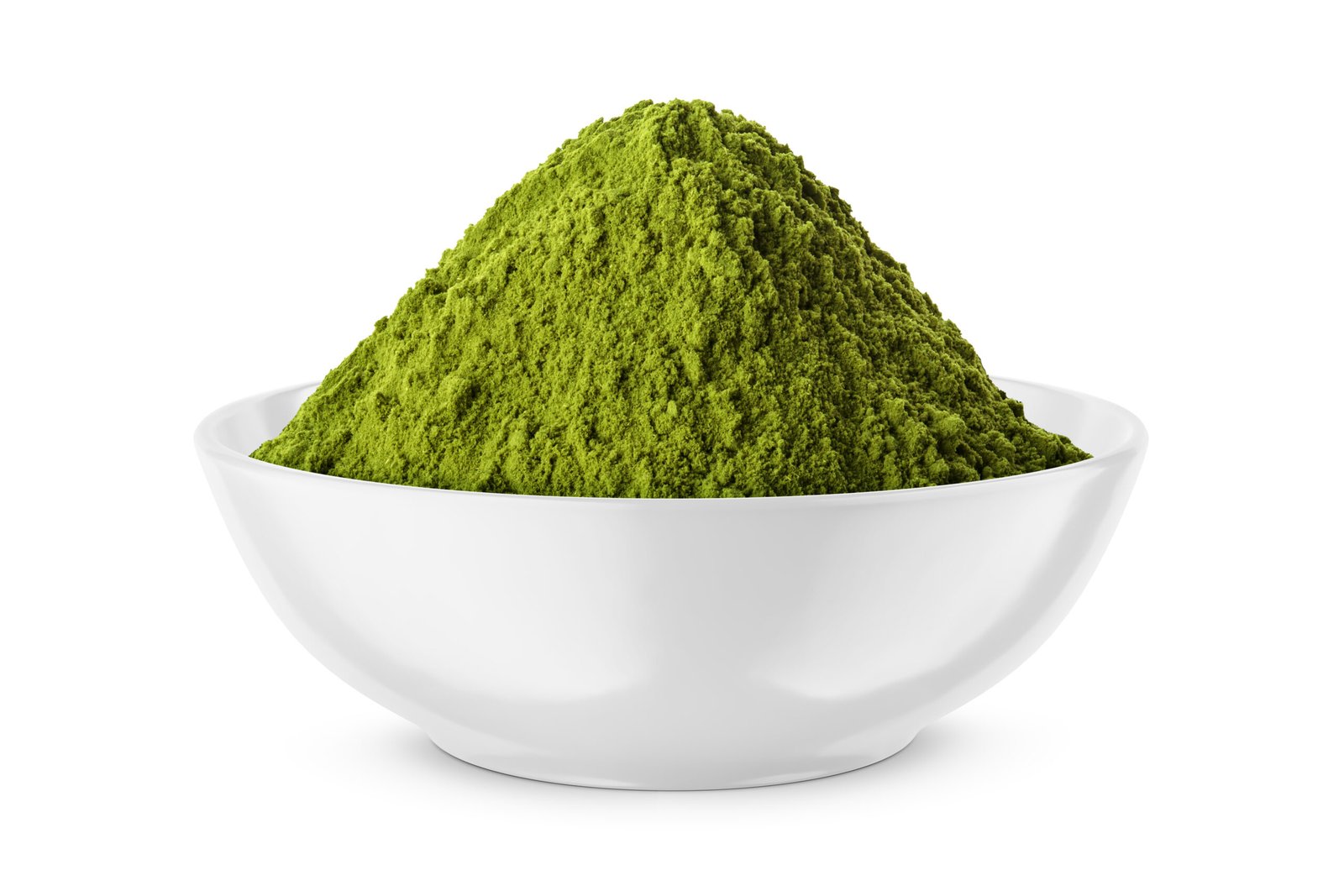
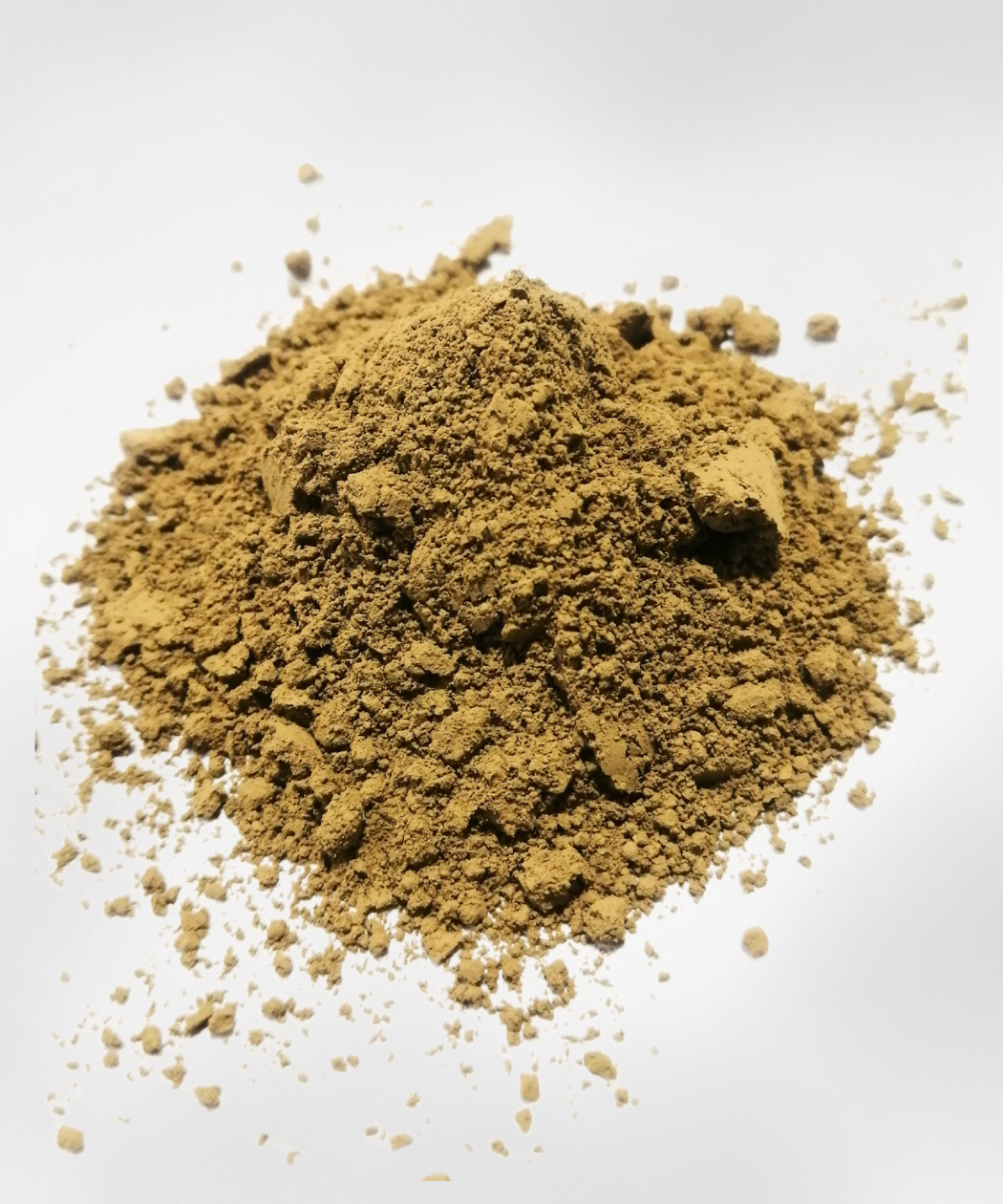
We mapped it all into a single diagram. This is the classification system based on how Japan’s tea industry categorizes green powders — not the ceremonial/culinary split you see in Western retail.
powders,
categorized
The “ceremonial” and
“culinary” chaos
“Ceremonial grade” typically centers on first harvest matcha — but autumn tencha has been found inside products labeled ceremonial.
“Culinary grade” does not distinguish between autumn tencha, moga, and ground sencha — products with fundamentally different methods, some not matcha at all.
These marketing terms have no official definition and obscure the real categories Japan’s industry uses.
Every green powder falls into one of three branches, determined by how it’s made. Below, we walk through each one.
Branch 1: Matcha — processed through a tencha production line
According to the Japan Tea Central Association’s Green Tea Labeling Standard (緑茶の表示基準), matcha is defined as:
Tencha — tea leaves shade-grown, steamed, and dried without rolling in a tencha kiln — ground into fine powder using a stone mill or equivalent. 「碾茶(覆下栽培した茶葉を碾茶炉等で揉まずに乾燥したもの)を茶臼等で微粉末状に製造したもの」
Three elements define matcha under this standard: shade cultivation (覆下栽培), the tencha kiln (碾茶炉), and grinding into fine powder. Remove any one of these, and it’s not matcha by the industry’s own definition.
The tencha kiln — tencha-ro — is what separates matcha from every other Japanese tea. This isn’t a single appliance. It’s a dedicated drying facility: a brick-built chamber roughly 10 to 15 meters long, 3 meters wide, and up to 4 meters tall, housing 3 to 5 tiers of metal mesh conveyors that slowly carry the steamed leaves through radiant and hot-air heat. The tencha kiln sits at the center of a full production plant — including steaming machines, cooling towers, stem separators, and finishing dryers — that can cost hundreds of millions of yen to build. This is industrial infrastructure, not equipment you add to an existing factory.
Sencha, gyokuro, hojicha — they’re all rolled during processing, which shapes the leaves into tight needles and breaks the cell walls for infusion. Tencha skips rolling entirely. The leaves are dried flat, then sorted to remove stems and veins, keeping only the soft leaf tissue.
Within the matcha branch, there are three tiers — and the differences between them are significant.
First harvest tencha (一番茶碾茶)
The first harvest — picked in late April to May — is where authentic drinking matcha comes from.
Before harvest, the tea plants are shaded for roughly 14 to 21 days using fabric covers or, in rare cases, the traditional straw-and-reed method called honzu, practiced in Uji for over 400 years. Shading suppresses photosynthesis, which prevents the amino acid L-theanine from converting into catechins. The result is a leaf with concentrated umami, reduced bitterness, high chlorophyll (the source of that vivid green), and a distinctive aroma called ooika — a sweet, almost seaweed-like scent unique to shade-grown tea.
This is the matcha used in tea ceremony, drunk straight as usucha (thin tea) or koicha (thick tea), and sold by the established Uji houses like Marukyu Koyamaen and Ippodo.
Second harvest tencha (二番茶碾茶)
About 45 days after the first harvest, the tea plants produce a second flush. This is also shade-grown and processed through the tencha kiln — the same process as first harvest. But the shading period is shorter, the leaves contain roughly a third of the theanine found in first harvest, and the catechin content is significantly higher — making the tea more bitter and less umami-rich.
Second harvest tencha is most commonly blended with first harvest to produce mid-grade drinking matcha — this is how many “everyday matcha” products on the market are made. On its own, it also goes to food processing.
An important detail: second harvest tencha is not classified as “food-processing tencha” by Japan’s industry. It meets all technical requirements for matcha — it’s just lower quality. According to data compiled by Kuwabara Hideki, a fourth-generation tea broker in Uji, approximately 39% of Kyoto Prefecture’s tencha production was second harvest as of 2014.
Second harvest tencha production began around 1980 in Nishio, Aichi Prefecture — compared to the 800+ year history of first harvest tencha in Uji. It expanded rapidly from the Heisei era onward, driven by demand for food-processing matcha.
Autumn tencha (秋碾茶) — the gray zone
This is where the story gets complicated.
Autumn tencha is processed through a tencha kiln — the same equipment used for first and second harvest. By that measure, it belongs in the matcha family. But its raw material is fundamentally different.
A 2020 research bulletin from the Kyoto Prefectural Tea Research Institute documents the growth of autumn tencha production in Kyoto, noting that the raw material has been open-field cultivated autumn leaves — grown without shade covering:
“In recent years, driven by the growing demand for food-processing matcha for purposes such as adding color, the production of autumn tencha using open-field cultivated autumn buds has been increasing year by year in Kyoto Prefecture.” 「近年、色沢付与等を目的とする食品加工用抹茶の需要拡大に伴い、京都府では露天栽培された秋芽を原料とする秋てん茶の生産量が年々増加しています」
The same document records that in April 2020, the labeling standard was updated:
“Autumn tencha grown without shade covering is no longer recognized as matcha material. Shading of autumn tencha crops is expected to increase going forward, as producers seek to qualify it as matcha material.” 「覆いをせずに栽培された秋てん茶は抹茶原料として認められないこととなり、今後、秋てん茶を抹茶原料とするために、秋てん茶の被覆栽培が増加することが見込まれます」
Why wasn’t autumn tea shaded before? The answer likely lies in the biology of the tea plant. Research from the Shizuoka Prefectural Tea Research Center has shown that long-term shading during the first and second harvests places significant stress on the tea bush — reducing autumn bud growth, depleting starch reserves, and potentially lowering the following year’s first harvest yield. After enduring spring and summer shading, the bush needs its autumn growth period to recover. Adding shade during autumn is an additional burden that the industry has no established body of research on.
Nearly all autumn tencha goes to food manufacturing — matcha ice cream, matcha chocolate, matcha-flavored drinks. But as Japanese Wikipedia’s matcha article points out, the label “food-processing” tends to disappear somewhere along the supply chain. By the time it reaches consumers overseas, it’s often sold simply as “matcha.”
The in-between category: “food-processing tencha”
The infographic shows a dashed box that crosses two branches — matcha and green tea powder. This represents how Japan’s tea industry handles autumn tencha and moga (described below) in practice.
Both products are widely treated in the industry as “food-processing tencha” (食品加工用碾茶) — a category for green powders understood to be food-manufacturing material rather than drinking matcha. Kuwabara Hideki describes both as “加工用抹茶” in his writings. Nakamoriseicha, a Mie Prefecture producer, directly labels its moga product as “食品加工用碾茶.”
The Japan Tea Central Association’s labeling standard addresses this in a footnote:
“Autumn tencha, moga, and similar raw materials dried without rolling in a tencha kiln or equivalent are understood to be food-processing tencha, used exclusively as food-processing material.” 「なお、碾茶炉等で揉まないで乾燥された秋碾茶、モガ茶等の原料茶葉は、食品加工用碾茶と称してもっぱら食品加工用原料に供されるものと理解する。」
It’s worth noting that this is an industry guideline, not a legal standard — no JAS regulation or government body defines “food-processing tencha.” The wording also leaves room for interpretation: the footnote groups autumn tencha and moga into a single sentence, which can read as though both are processed in a tencha kiln — when in fact, not using a tencha kiln is precisely what makes moga what it is. The lack of a sharp, binding line between these categories is part of the picture. It’s no surprise, then, that the Western market’s “ceremonial” and “culinary” labels are even less precise.
Branch 2: Green tea powder — not processed through a tencha kiln
Everything in this branch is made without a tencha kiln. That’s the dividing line.
Moga (モガ)
Moga is a product most matcha drinkers have never heard of — but it may be inside more “matcha” products than anyone realizes.
Kuwabara Hideki defines moga as tea leaves processed using sencha manufacturing equipment, with the rolling steps removed. The leaves are steamed, roughly tumbled in a heated drum, and dried — but they never pass through a tencha kiln. The result is a flat, unrolled leaf that superficially resembles tencha but was produced through an entirely different process.
Moga originated around 1985 in Mie Prefecture. The innovation was economic: tencha production lines cost hundreds of millions of yen, while moga can be produced on existing sencha equipment with minimal modification. This opened the door for sencha farmers to supply the exploding demand for food-grade matcha powder without the capital investment that tencha production requires.
The raw material for moga is, in Kuwabara’s words, “mostly cheap open-field autumn bancha” — unshaded, late-season leaves. After grinding, moga is sold as “food-processing matcha” or “food-grade matcha,” either on its own or blended with genuine tencha.
Tyas Sōsen of Kill Green, a Belgian tea specialist based in Uji, describes the problem clearly: moga powder is “in appearance hardly distinguishable from actual matcha apart from a few differences in color and minuteness of the powder.” Once it’s ground, even experts struggle to tell moga from low-grade tencha by sight alone.
Ground leaf tea (粉末茶)
This is the broadest and most straightforward category: finished leaf tea — sencha, gyokuro, hojicha, or any other type — that has been ground into powder as a secondary process.
Unlike moga, which mimics tencha processing, ground leaf tea doesn’t pretend to be anything other than what it is. It’s tea that was fully manufactured as leaf tea first, then pulverized.
Often enjoyed as a casual tea — just dissolve in water, no teapot needed. It’s not whisked like matcha; think of it as an easier version of loose-leaf tea. Because you consume the entire leaf rather than an infusion, these powders deliver the full range of the leaf’s nutrients — including catechins, the antioxidant compounds that are especially abundant in unshaded tea leaves. (Catechins are the same bitter compounds that shade cultivation suppresses in tencha production — a trade-off between flavor and antioxidant content.)
Hojicha powder is the exception — it’s treated and consumed alongside matcha. Whisked, poured over oat milk, served as a latte. But this is a relatively recent development. By the Japanese industry’s categorization, hojicha powder is ground leaf tea, not matcha. It belongs here, in this branch.
Branch 3: Konacha — not a powder at all
Konacha (粉茶) is included here for completeness, because its name literally contains the character for “powder” (粉) and it’s sometimes confused with powdered tea.
But konacha is not a powder. It’s the fine fragments left over from sifting during sencha or gyokuro production — a manufacturing byproduct. These particles don’t dissolve in water. They’re brewed in a teapot, like any leaf tea, and the fragments are discarded after brewing.
Konacha is famous as agari — the tea served at traditional counter-style sushi restaurants in Japan, brewed in a teapot and poured by the chef. At conveyor-belt chain sushi restaurants, you’ll find a different setup: a small canister of green powder sits at each table alongside the soy sauce and ginger. That powder is ground leaf tea — the category we described above — not konacha and not matcha. You add hot water from the tap at the table, stir, and drink. It’s a self-serve, casual version of tea that has nothing to do with the teapot-brewed agari of a traditional sushi counter.
None of these products are the problem
To be clear: autumn tencha, moga, and other food-processing powders are not what we’re criticizing here. They exist because the market demanded them — and continues to demand them. The global appetite for matcha-flavored food and beverages is real, and these products serve that need.
Tea farming is a livelihood. For most tencha producers, the first harvest accounts for the vast majority of their annual income — everything after that brings significantly less. Producing second harvest, autumn tencha, or other late-season teas is a legitimate way to diversify revenue from the same land. Farmers are responding to genuine industry demand, and they’re doing their job.
The problem is what happens after the product leaves the farm. These powders circulate without clear categorization — blurred together under vague labels, or simply called “matcha” with no distinction. That’s what erodes the meaning of the word. And that’s what leaves consumers unable to tell what they’re actually buying.
The “ceremonial” and “culinary” chaos
This is where the labels fail.
“Ceremonial grade” typically centers on first harvest tencha matcha. But autumn tencha — a product the Japanese industry treats as food-processing material, historically made from unshaded leaves — has been found inside products marketed as ceremonial grade.
“Culinary grade matcha” is worse. The label doesn’t distinguish between autumn tencha (tencha kiln processed, sometimes shaded, sometimes not), moga (sencha-line processed, almost never shaded), and ground sencha (fully rolled leaf tea, ground up). These are three fundamentally different products. In the case of moga and ground sencha, they don’t meet the Japanese industry’s definition of matcha at all.
These terms have no official definition — no regulatory body, in Japan or internationally, certifies what is “ceremonial” and what is “culinary.” And as we’ve seen, even Japan’s own industry categories carry ambiguity. But at least those categories draw lines based on how the tea is actually made. “Ceremonial” and “culinary” draw no lines at all.
What this means for you
If you’ve ever whisked a bowl of genuine first-harvest matcha and compared it to a “culinary grade” powder, you already know the difference. The umami, the color, the aroma, the aftertaste — they’re not on the same spectrum.
In our view, the single most important thing to know about matcha isn’t the cultivar, the region, or whether it’s organic. It’s whether the starting material is first-harvest, shade-grown tencha. We believe that’s the foundation everything else builds on. Without it, the other features — stone-milled, single-origin, hand-picked — don’t carry the same meaning.
That isn’t to say second harvest or other teas have no value. They do, and they serve real purposes. But if you’re buying matcha to drink — to whisk and taste on its own — the starting point matters more than any other variable.
Look for transparency. Producers who specify the harvest season, the shading method, and the processing method are telling you something real. Producers who only say “ceremonial grade” are not.
Ask questions. A trustworthy seller will know — and will tell you — whether their matcha is first-harvest tencha, what region it’s from, and how it was processed.
Taste. Once you know what first-harvest tencha matcha tastes like, you’ll recognize the difference immediately. No label needed.
Sources
- Japan Tea Central Association — Green Tea Labeling Standard (2019) — Voluntary industry labeling guidelines; no JAS standard or government regulation defines these categories independently (公益社団法人日本茶業中央会「緑茶の表示基準」)
- Kuwabara Hideki / 桑原善助商店 — Fourth-generation Uji tea broker: history, processing, glossary
- Kyoto Prefectural Tea Research Institute — bulletin, October 2020 — Unshaded autumn tencha production and 2020 labeling update (京都府農林センター茶業研究所)
- Shizuoka Prefectural Tea Research Center — No.646, 2019 — Shading stress on tea bushes and impact on autumn buds (「被覆が茶樹の生育に及ぼす影響と簡易な樹体診断法」)
- Nakamoriseicha / 中森製茶 — Mie producer; labels moga as “食品加工用碾茶”
- Tencha kiln specifications — Kiln dimensions and line components (碾茶製造機械について)
- Terada Seisakusho — Tencha plant — Full production line configuration (寺田製作所)
- Tyas Sōsen / Kill Green — Moga and matcha quality (English)
- Ohki Ken / 大木賢 — “Is that ‘matcha’ really matcha?” (「その「抹茶」は抹茶ですか?」)
- NARO / 農研機構 — Matcha chemical composition and pricing (2018)
- Kyoto Prefecture tea survey — Autumn tencha production data (京都府茶業調査)
- Kyoto Prefecture — Shade cultivation — Shading methods (被覆栽培)
- お茶とロックと私 — Shizuoka tea farmer on matcha production costs